
Table of Contents
The Good Old Days of Search
Before AI and GEO, there was good old Google Search. Or if we really want to date ourselves – Ask Jeeves. Remember when searching the internet felt like communicating with a slightly slow alien librarian?
You couldn’t just ask a normal question the way you would ask your friend or neighbour. You had to strip away all human grammar, lean into your inner caveman, and type something like: “best pizza edmonton cheap fast non poisonous.”
Fast forward to today, and search behaviour looks completely different. Millions of people are opening up ChatGPT, Gemini, or Google’s AI Overviews and typing (or just speaking into their device microphone) entire conversational paragraphs, such as: “Where can I get a great sourdough pizza with gluten-free options that won’t destroy my stomach, and is open past 10 PM near central downtown?”
See the difference? The new way of going about search is more natural (more like how the human brain compiles and phrases questions) and is infinitely more conversational.
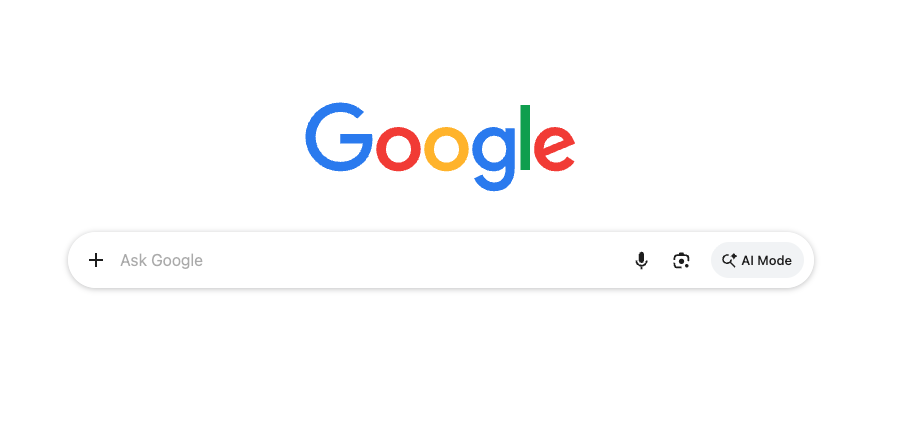
The era of typing disjointed keywords into a plain white box is rapidly winding down. Google recently rolled out significant core updates to its search engine, signalling a major shift in how information is indexed, summarized, and served. If you’ve noticed your website traffic wobbling (or altogether tanking) over the past few weeks, don’t throw your router or your computer out the window just yet.
Search engines aren’t dying, but they are most definitely evolving. Welcome to the new age of searching online: Generative Engine Optimization (GEO).

The Midlife Crisis of the Search Bar
The Reality Check: Yes, overall website click-through rates (CTR) are dropping. When an AI overview answers a user’s question directly on the page, they don’t always need to click through to your site, or may ask the AI several questions in a row before landing on a website that has the information they’re looking for.
Why That’s Actually Good News for Your Business
Before you start lamenting the loss of raw website traffic, consider who is reaching your site now.
Because AI Overviews handle the preliminary research phase, users who do end up reaching out to you are much further along in their decision-making process. They aren’t just “window shopping” through endless links anymore; they’ve already been given information that is more directly linked to their search, digested the facts and are ready to take action, whether that means filling out a contact form, making a phone call, or making a purchase directly. Less tire-kicking, higher intent.

What is GEO? (And Why Your Current Strategy Isn’t Trash)
This shift brings us to Generative Engine Optimization (GEO).
If traditional Search Engine Optimization (SEO) was about convincing an algorithm to rank your web link at the top of page one, GEO is the practice of formatting your online presence so Large Language Models (LLMs) such as ChatGPT or Gemini can easily read, trust, and quote your business as an authoritative source in their AI-generated summaries.
Does this mean your existing SEO strategy belongs in the garbage bin? Absolutely not.
The generative approach is not a replacement for traditional search; it’s a natural evolution that sits right on top of it. Traditional search still drives massive volume, and the structural foundations that make a site good for SEO (quality information that speaks to what you do, fast load times, clean code, and logical site hierarchy) are the exact same foundations that allow AI bots to crawl your content effortlessly.
Traditional Search vs. Generative
| Traditional Search Engine Optimization (SEO) | Generative Engine Optimization (GEO) | |
| Primary Goal | Rank #1 on the search engine results page (SERP) for at least one of your services. | Get cited and recommended as one of the links in the AI-generated summaries. |
| Target Input | Short keyword phrases, such as “commercial plumber Edmonton”). | Conversational, natural language queries, such as “Who is the most reliable emergency plumber near me for boilers in a high-rise apartment?” |
| Key Metric of Success | Organic impressions (views) and click-through rate (CTR). | Brand authority, AI citations, and direct conversion speed. |
| Content Strategy to Set You Up for Success | Keyword density and backlink volume. | Deep expertise, trust signals, structured data, and clarity. |
How AI Search Engines Choose the Sources to Answer User Queries
When Gemini, ChatGPT, or Google’s AI models comb through billions of web pages to formulate an answer, they aren’t playing a simple game of counting keywords. They process natural language and evaluate context, credibility, and clarity.
According to a Princeton University study authored by Dr. Vaibhav Kumar, AI Search Researcher, “Generative Engine Optimization methods can boost visibility in AI answers by up to 40%… If a model can’t justify pulling your content into an answer, it won’t.”
Here is what these digital brains are actually looking for when deciding who gets a place in the AI Overview spotlight:
- Keyword Stuffing Is Officially Extinct
Remember the mid-2000s when websites would paste “Best Web Design Agency City Name” fifty times in small white text at the bottom of the footer? Those days are long gone. AI models ignore cheap tricks and redundant, non-natural language and instead look for semantically relevant, high-quality, substantive content. If your page lacks actual substance that says real things about your business, the AI will skip right over it. - Expertise, Trust, and Credentials
AI models place a massive premium on demonstrated authority. They actively comb the internet looking for trust signals, and when someone poses a question related to your niche, they will crawl your online ecosystem, looking for key information that sets you (or your competitors) apart, such as:- Clear author profiles detailing real-world background and industry expertise
- This could appear as an author link in your blogs that connects to a profile page on your website. The AI wants to know that the person writing your content is a real human with real experience in your industry.
- Transparent source citations, certifications, and verified business credentials.
- If you are quoting other websites or sources for the information you share on your site, cite it and provide links – don’t pass it off as your own. If you have certifications or accreditation to do the work that you do, show it off! Ensure your credentials are listed somewhere on your website.
- Case studies and original data that prove you know what you’re talking about.
- Showcase the depth and variety of your skill in your area by creating a case study or portfolio section on your website.
- Showcase the depth and variety of your skill in your area by creating a case study or portfolio section on your website.
- Clear author profiles detailing real-world background and industry expertise
- Keep Your Website Content in a Clear, Well-Organized Structure
AI bots are remarkably like human readers, likely because they’ve been trained by human readers on what to look for and what content to prioritize. They appreciate clear organization and strongly dislike wasting their time wading through cluttered nonsense (also like most humans). Using proper heading tags, logical bullet points, clear service breakdowns, and structured data schema gives AI crawlers a direct roadmap to digest your expertise. - If Your Content Looks and Sounds Like AI, You’ll Probably Be Ignored. If your website content looks like an anonymous AI-generated regurgitation of existing websites, online content, and blog articles, search algorithms will treat it accordingly. Real human experience and authentic credentials are your biggest competitive advantage.

Steering the Ship Without Getting Lost in the Tech Hype
If all of this sounds like a lot to digest, take a deep breath.
Navigating the internet shifts that come and go isn’t about throwing away what works. Most of those things have stayed somewhat consistent since the birth of the World Wide Web. Successful navigation is about making proactive, sensible tweaks before your competitors notice the floor has moved.
At Digital Tea, we’ve been steering businesses through the wild west of the web for nearly 27 years (since 1999, to be exact). We were here when businesses were asking if they really needed a website; we were here when mobile-first indexing reshaped search, and we are here right now as artificial intelligence transforms how people discover and obtain the information they need.
We build proactive digital marketing strategies that integrate the new era of search into your existing website stack. From clean website architectures to comprehensive, authoritatively structured content, we help you make sure your brand isn’t just present online, but that you become the source the AI bots choose to trust. Taking these steps will ultimately help human web surfers find and value your content as well.
The Human Advantage: Search engines might be run by algorithms, but your digital agency shouldn’t be. When you work with Digital Tea, you aren’t passed off to automated phone trees or offshore ticket queues. You talk directly with the real-life specialists who monitor these search trends every single day.
Website Checklist: Is Your Site Ready for the New Era of Search?
Want to know if your website is positioned for the GEO era? Ask yourself these four quick questions:
- Is your content conversational? Does your site answer the specific, detailed questions your customers typically ask when they call you on the phone?
- Are your expertise signals visible? Do you showcase author bios, company history, certifications, and real customer results clearly for humans (and bots) to review?
- Is your layout clean, well-organized, and scannable? Can both a busy human and an AI crawler understand what you do quickly and easily (in roughly 5-10 seconds of scanning your site)?
- Has your site been updated recently (within the last 6 months-1 year)? Stale websites with thin, outdated content are slowly fading into the digital background as AI search expands.

Ready to Update Your Digital Presence?
The way we search is changing, but staying ahead of the curve doesn’t have to be overwhelming. Like any bigger project where you might find yourself feeling anxious, the two easiest ways to address the issue are planning ahead and asking for help when you need it. Whether you need to refresh your existing website structure, strengthen your technical SEO, build an AI-friendly content strategy, or fully redesign your website with the future in mind, we’re here to help.
Reach out to the team at Digital Tea today!
Let’s make sure your business stays visible, authoritative, and ahead of the game.